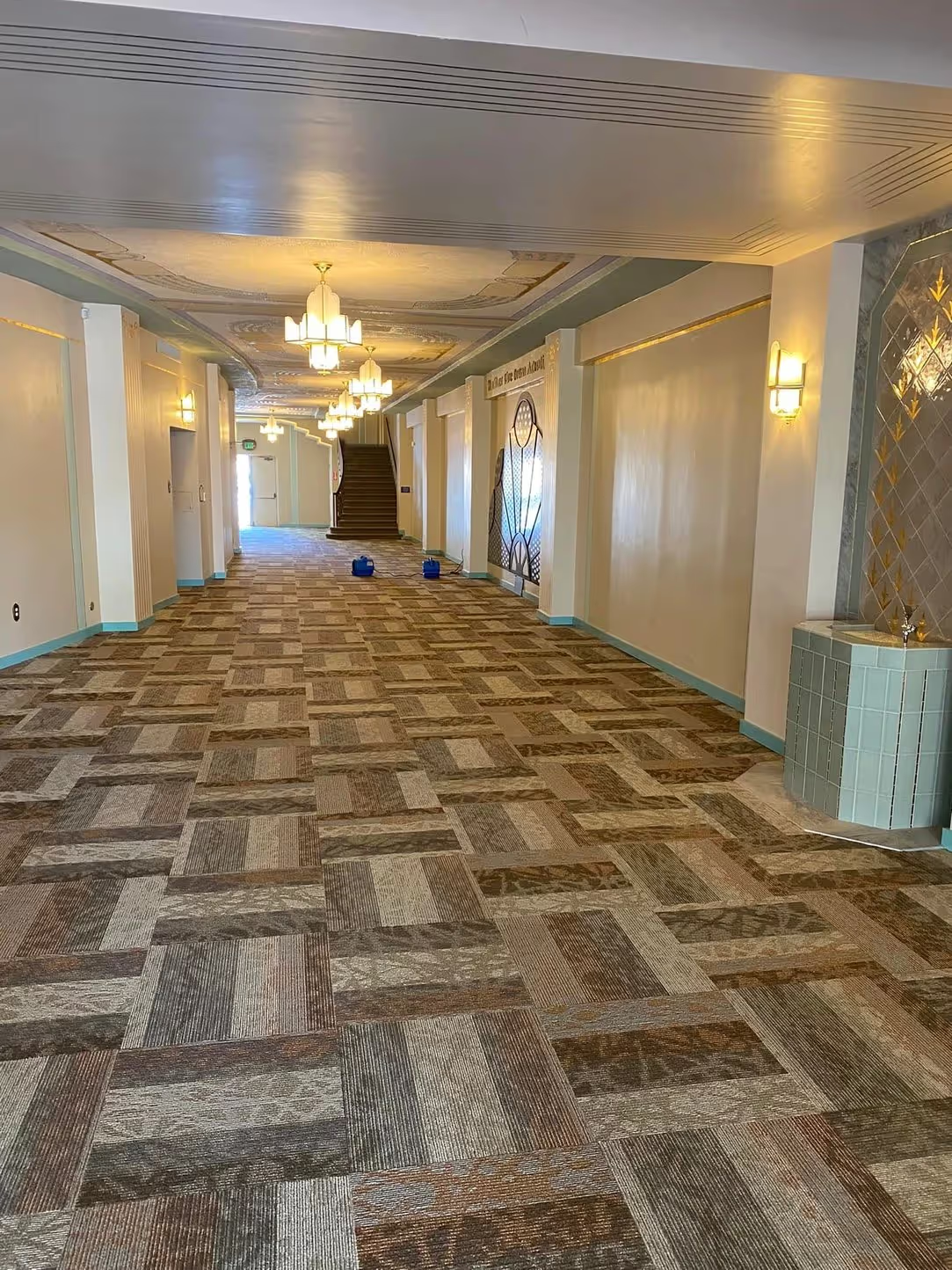
One of our customers described the 2020 season better than we could. She watched her beige carpets turn gray, week by week, from ash off fires that were not even close to her house — and she said it read as a daily reminder of what the rest of the county had lost.
That is a specifically Butte County problem, and it is worth understanding because the instinct most people have about it is wrong.
Ash is not dust
Wildfire ash is very fine, alkaline, and partly made of things that were not supposed to burn. It gets into a building three ways: through open windows and doors, through the HVAC return, and on the bottom of shoes. Once it is in a carpet it does not sit on top of the pile the way ordinary household dust does. It works its way down into the base of the fiber, close to the backing, which is the one part of a carpet a household vacuum has almost no access to.
Two consequences follow.
It keeps coming back. You vacuum, the carpet looks better for a day, and then foot traffic agitates the pile and brings more of it up. That cycle is not you doing it wrong; it is a vacuum reaching about the top third of the pile.
It is abrasive. Fine particulate between carpet fibers cuts them every time somebody walks across the room. That is permanent — a carpet worn that way does not clean up later, because the fiber is physically damaged. Leaving ash in a carpet through a whole season costs you carpet life, not just appearance.
What actually removes it
The order matters more than people expect.
- Dry vacuuming first, with a commercial machine, to lift what is loose. Introducing water before this step turns dry ash into a paste.
- Pre-spray and agitation, to break the bond between the particulate and the fiber.
- Truck-mounted hot water extraction, which flushes the pile and pulls the water and everything in it out of the building.
- A pH neutralizer. This one is specific to ash. Wildfire ash is alkaline, and so are most cleaning agents — balancing the pH afterwards is what stops a carpet re-soiling quickly, and carpet manufacturers consider it one of the most important steps in the process.
That is the same twelve-step process we use on any carpet. Ash is not a different job; it is a job where skipping the dry steps shows immediately.
Do not forget the soft furnishings
Upholstery collects ash exactly the way carpet does, and it is more likely to be damaged by a well-meaning attempt to clean it — a fabric that will shrink or watermark under water looks identical to one that will not. Sofas, dining chairs and headboards are all worth including at the end of a bad season. So are area rugs, which we can collect and wash properly in the shop rather than on your floor.
When to book it
At the end of the season rather than during it, if you have the choice — there is no point cleaning in August if the air is still full of it. But if the ash is heavy enough to see on hard surfaces, do not wait the whole season out. The abrasion is happening the entire time.