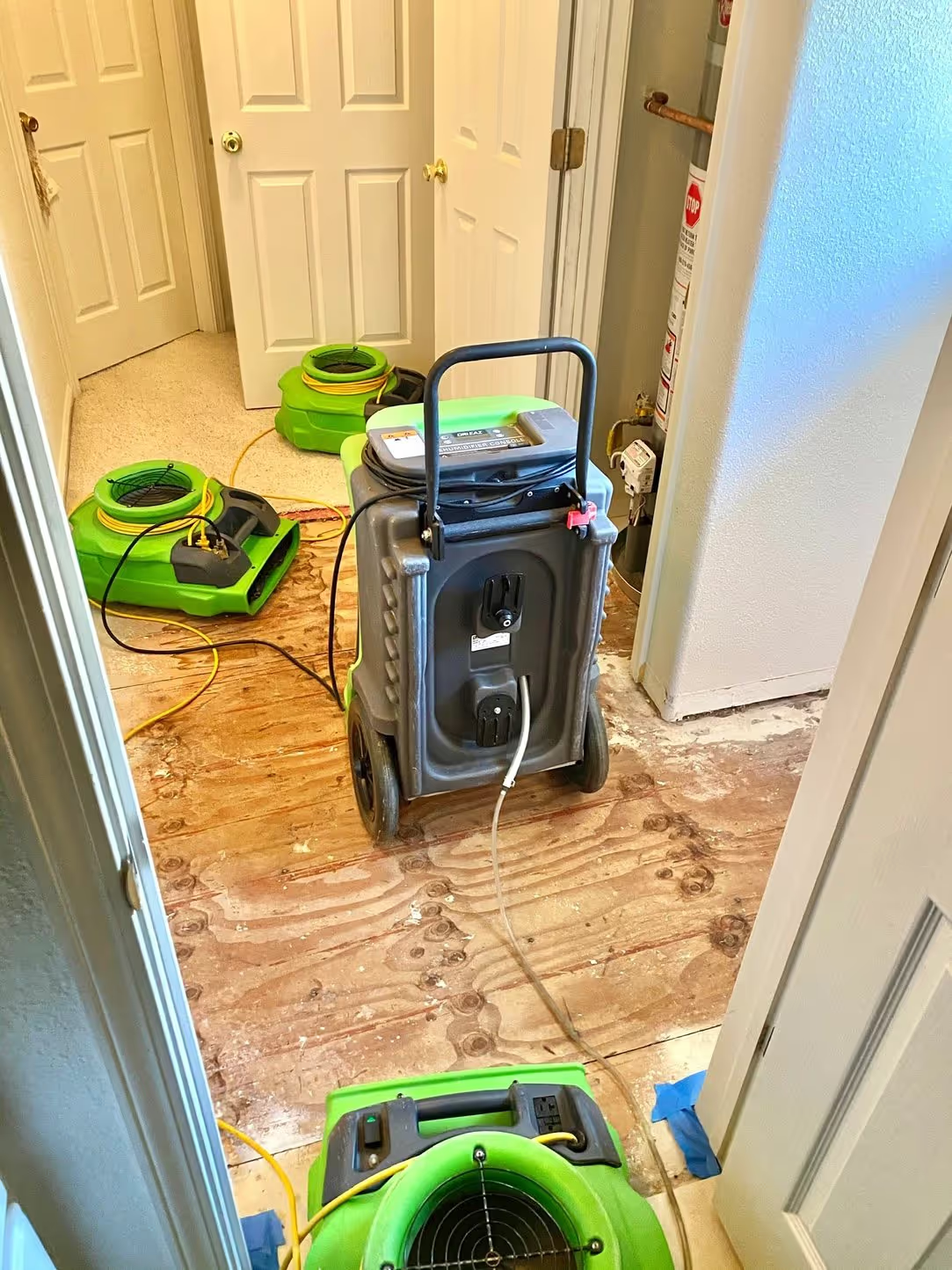
Flooding is caused in many different ways: pipes leaking, refrigerator lines breaking, a washing machine overflowing, a roof leaking, or rising outdoor water levels. Whatever the scenario you are facing, it is imperative to act fast and call as soon as possible.
High Tech Cleaning & Restoration is available 24 hours a day, 7 days a week for emergency water extraction and water damage restoration. You get a rapid response, a no-obligation estimate, and a team that can bill your insurance directly. Our technicians are trained and certified by the Institute of Inspection, Cleaning and Restoration Certification to remove moisture, minimize damage and prevent mold growth.
Our four-step process
Step 1 — Inspection. We start with a thorough moisture inspection using thermal imaging cameras, hygrometers and moisture probes. Those tools let us measure the actual extent of the damage inside walls, cabinets and ceilings rather than guessing from what is visible. This is the step that decides whether the job is done properly, because water travels much further than the wet patch on the floor suggests.
Step 2 — Extraction. We begin extracting standing water from carpet, floors and crawlspace areas. Truck-mounted extraction equipment removes as much of the moisture as physically possible before any drying equipment goes in, because every gallon extracted is a gallon that does not have to be evaporated.
Step 3 — Drying. Professional air movers and dehumidifiers eliminate moisture held in drywall, flooring, cabinets, baseboards and studs. Placement matters more than quantity — equipment in the wrong position moves damp air around a room instead of out of the materials.
Step 4 — Monitoring. Routine moisture inspections continue afterwards to track the building’s humidity. The goal is to return the building to an acceptable humidity level and confirm all building materials are below 15% moisture content. Those daily readings are also the documentation your insurer needs.
What water damage looks like in Butte County
Winter is the season that produces the calls that come in groups. Atmospheric rivers between November and March drop water faster than the valley floor drains, and in the low ground around Gridley, Biggs and the south side of Oroville the water table comes up with it. That reaches a building through a crawlspace or a garage slab more often than through the front door.
Summer produces a different and quieter kind of loss. Weeks over 100°F put every cooling system under load, and a plugged air-conditioning condensate line or a failed evaporative cooler supply will run for days without anyone noticing. On a slab the water tracks sideways under the flooring; over a crawlspace it soaks the subfloor with no visible stain at all. Both are why we start with thermal imaging rather than a mop.
The type of building matters too. A manufactured home has very little clearance between the finished floor and the belly, and the vapor barrier underneath holds water in rather than letting it drain, so extracting the surface and leaving is how those floors fail six months later. They have to be opened, dried and monitored.
Working with your insurance
We work with all insurance providers and can bill your insurer directly. More importantly, we document the loss the way an adjuster needs it documented: moisture readings on arrival, thermal images of what was found behind the surfaces, photographs, an inventory of affected materials, and a daily drying log through to completion.
That documentation is what decides how a claim goes. A customer whose pipe burst told us we were fast to come out, got the house dried, and were "very knowledgeable on how to work with insurance" — the second half of that is not an accident, it is the part of the job most people do not see.
Where we work
High Tech provides water damage restoration services across Butte County, California — Oroville, Chico, Paradise, Palermo, Durham, Gridley, and Biggs — and just over the county line in Marysville. See every area we serve.