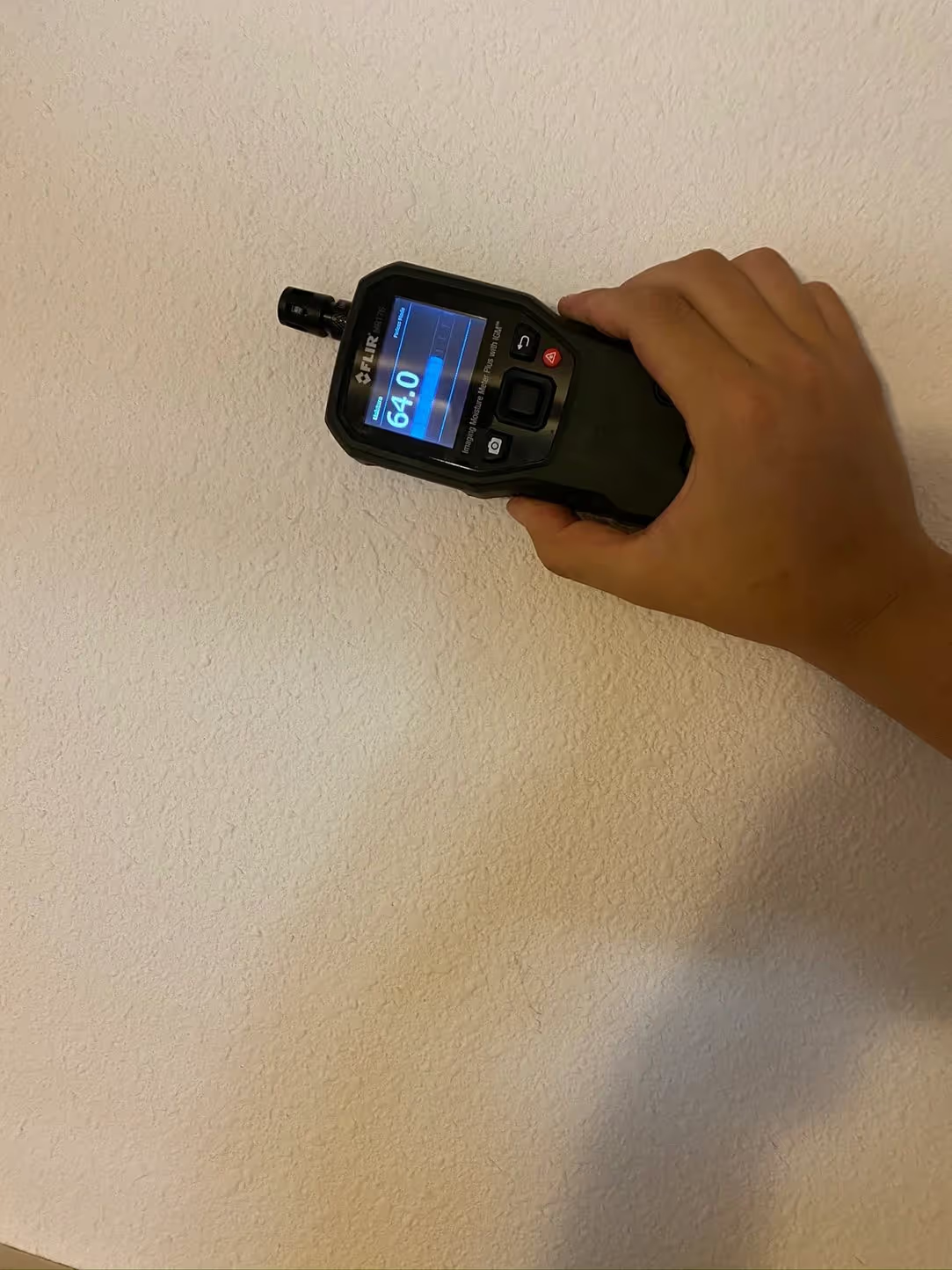
Mold needs three things: an organic material to feed on, a temperature it likes, and moisture. Two of those are permanently present in every building. Moisture is the only variable, which is why the first thing we do is find where the water is coming from — not the growth itself.
Cleaning visible mold off a wall without resolving the source is the most common mistake in this trade. It looks finished, it costs money, and the growth returns in the same place within a season because nothing about the conditions changed.
Inspection first
We inspect with the same tools we use on a water loss: thermal imaging to find temperature differences that indicate damp, moisture probes and hygrometers to measure it, and a physical look at the places moisture actually collects — under sinks, behind appliances, in crawlspaces, around windows and at the base of exterior walls.
Visible growth is usually the smallest part of the problem. What matters is the extent of the wet material behind it and how far the moisture has traveled, and that is what the inspection is measuring.
Containment, removal, drying
Disturbing mold makes it airborne, so the work area is contained with sheeting and put under negative air pressure before anything is touched. Without that, cleaning one room distributes spores through the rest of the building via the HVAC — which turns a contained problem into a whole-house one.
Non-salvageable porous material is removed and bagged inside the containment. Salvageable surfaces are cleaned and treated. Then the area is dried to a stable moisture content and monitored, because remediation is not complete until the conditions that caused it are gone.
Finally, the source is addressed. Sometimes that is our work — a failed supply line, a crawlspace that stays wet, a bathroom that has never had a working extractor. Sometimes it belongs to a plumber or a roofer, and we will tell you plainly which it is.
Where we find it in Butte County
Crawlspaces are the most common location here by a wide margin. A great deal of the older housing in Oroville, Gridley and Biggs sits on a raised foundation over a crawlspace, and in rice and orchard country the ground under those houses stays damp through the wet months. Moisture rises into the subfloor and the framing whether or not anything ever leaked indoors.
The second is bathrooms and laundry rooms with no working ventilation, which is a year-round problem rather than a seasonal one. The third is the slow leak nobody found — behind a dishwasher, under a fridge, or in the wall behind a shower — which is exactly the kind of thing thermal imaging is for.
Where we work
High Tech provides mold remediation services across Butte County, California — Oroville, Chico, Paradise, Palermo, Durham, Gridley, and Biggs — and just over the county line in Marysville. See every area we serve.