Water damage is one of the few problems where the difference between a good outcome and an expensive one is decided in the first hour, before anybody professional has arrived. Here is what is worth doing while you wait.
1. Stop the water
Find the shut-off. If it is a supply line to an appliance there is usually a valve behind or under it; if you cannot find that one, use the main. It is worth knowing where your main shut-off is before you need it — go and look this weekend, and make sure it turns.
2. Kill the power to the affected area
If water has reached outlets, a wet floor near a panel, or anything with a cord running through it, switch that circuit off at the breaker. Do not walk into standing water to reach a switch.
3. Photograph everything, before you move anything
This is the step people skip and later regret. Photograph the source, the standing water, the affected rooms and the contents, before any of it is moved or mopped. An adjuster is deciding a claim from evidence, and the evidence of what it looked like at its worst only exists if somebody took it.
4. Get contents up off the floor
Lift what you can — furniture legs onto blocks or foil, rugs off the carpet, boxes and books off the floor. A wet wool rug left lying on a carpet will transfer dye into it within hours, and that stain is permanent.
5. Call
Do this before you call your insurer, not after. Stopping the damage spreading is something you are entitled to do straight away, and the sooner extraction starts the more of the floor survives. We answer the phone 24 hours a day.
6. Do not run your household fans at it
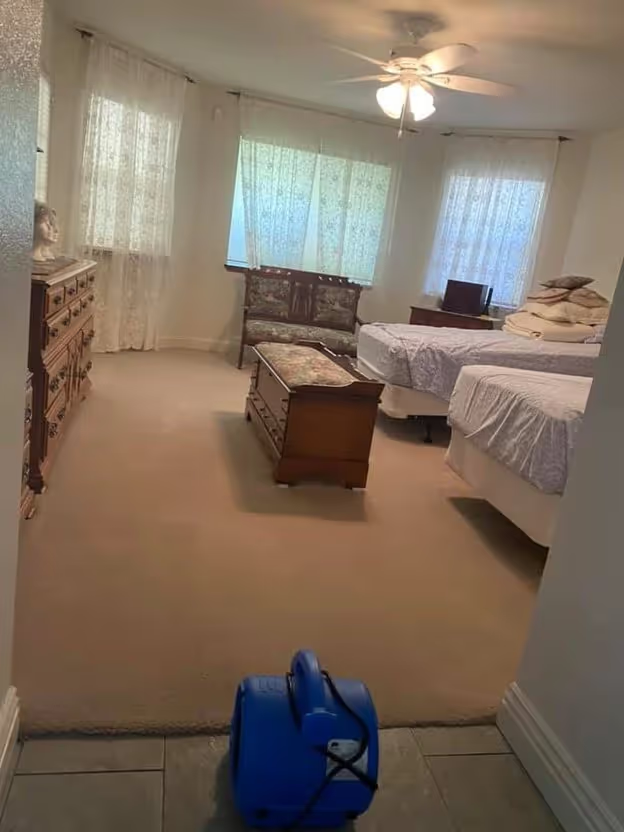
This is the common mistake. A box fan blowing across a wet carpet feels productive, but all it does is move humid air into the next room — which is how a one-room problem becomes a whole-floor problem. Structural drying works because air movers and dehumidifiers are placed as a system, with the dehumidifier pulling the moisture out of the air rather than relocating it.
What happens when we get there
We start with a moisture inspection — thermal imaging camera, hygrometer, moisture probes — because water travels much further than the wet patch on the floor suggests, and the extent of it is not something you can see. Then truck-mounted extraction, then drying equipment placed properly, then daily readings until every building material is below 15% moisture content.
Those daily readings are also the documentation your insurer needs. That part is not an extra; it is most of what decides how the claim goes.